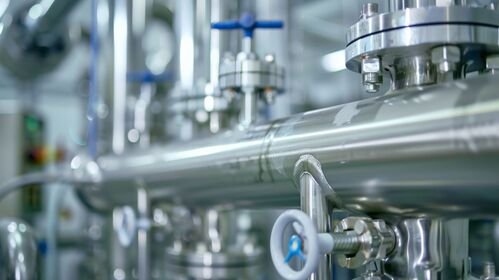
Overpressure in industrial systems can cause equipment damage, production downtime, and safety risks. Properly selected, installed, and maintained pressure safety valves help release excess pressure in a controlled manner.
Keeping fluids within defined pressure limits is essential for process safety, equipment integrity, and production continuity in industrial facilities. A pressure safety valve helps protect the system by opening when pressure reaches a specified limit and releasing excess pressure in a controlled manner. This helps protect pipelines, tanks, pressure vessels, and process equipment from damage caused by overpressure.
Pressure control involves more than installing a valve. Operating conditions, fluid properties, temperature, required relief capacity, and potential overpressure scenarios must be evaluated together. A properly designed overpressure protection system supports worker safety and helps reduce the risk of equipment damage and unplanned production downtime.
What Causes Overpressure in Industrial Systems?
Pressure can rise in an industrial system for several reasons. A valve left closed, a blocked outlet, a pump or compressor operating under unsuitable conditions, or a control system failure can all lead to overpressure. Rising temperatures in a closed volume can also cause the fluid to expand and increase system pressure.
Other causes include gas generated by chemical reactions, sudden vaporization, exposure to an external fire, and phase changes within equipment. In some processes, several minor deviations occurring together can develop into a serious overpressure scenario.
System design should therefore account for more than normal operating conditions. Startup, shutdown, maintenance, equipment failure, and emergency scenarios must also be assessed. Identifying potential sources of pressure is a key step in selecting suitable protection equipment and calculating the required relief capacity.
What Risks Does Overpressure Pose to Equipment?
Pressure equipment is manufactured to withstand defined design limits. When system pressure exceeds those limits, equipment may deform, seals and connections may leak, or pipelines may be damaged. If pressure is not brought under control, equipment integrity can be seriously compromised.
A leak involving flammable, explosive, toxic, or high-temperature fluids can have consequences beyond production losses. It may also create significant risks for workers and the environment. Replacing damaged equipment, shutting down a process, and making the site safe again can increase operating costs.
Overpressure protection provides a preventive layer of safety. Releasing pressure safely when the system moves beyond its permitted limits can help prevent more serious failures. To provide effective protection, however, the equipment must be selected correctly, installed properly, and inspected at appropriate intervals.
How Do Pressure Safety Valves Work?
Pressure safety valves are mechanical protection devices that operate automatically when inlet pressure reaches a predetermined set pressure. The valve remains closed during normal operation. When system pressure reaches the set point, the pressure overcomes the closing force, opening the valve and allowing excess fluid to be discharged.
As the valve opens, pressure in the system is reduced. Depending on the valve design and operating conditions, it closes again after pressure falls to the specified reseating level. This operation can take place without an external power source, providing a mechanical layer of protection if electrical power or automation systems fail.
For a valve to work effectively, its set pressure must be compatible with the system’s allowable pressure limits. Its relief capacity must also be sufficient for the governing overpressure scenario. An undersized valve may open but still fail to discharge fluid quickly enough to control the pressure rise.
Where Are Pressure Relief Valves Used?
Pressure relief valves can be used on tanks, boilers, heat exchangers, pipelines, pumps, compressors, and other process equipment. Depending on the application, a valve may be selected for gas, vapor, or liquid service. Its required operating characteristics and technical specifications vary with the system it protects.
In systems containing compressible fluids, pressure can rise rapidly, making relief performance especially important. Liquid applications may require protection against thermal expansion or a blocked discharge line. Tank systems call for separate consideration of pressure and vacuum conditions associated with filling, emptying, and temperature changes.
The destination of the discharged fluid is another important design consideration. Releasing it directly into the atmosphere may be unsafe or unsuitable. A closed relief line, collection system, or appropriately designed outlet arrangement may be required. Any back pressure in the discharge line must also be considered because it can affect valve performance.
What Should Be Considered When Selecting the Right Valve?
Valve selection begins with the system’s design pressure, normal operating pressure, and required set pressure. The necessary relief capacity is then calculated for the governing scenario. Connection size alone is insufficient for this calculation; fluid type, temperature, density, flow rate, and back pressure must also be considered.
Fluid chemistry influences the choice of materials for the valve body and internal components. Materials that are unsuitable for corrosive or high-temperature service may have a shorter service life and develop sealing problems. Depending on process conditions, spring-loaded, pilot-operated, or other valve designs may be evaluated.
Installation conditions are equally important. Pressure losses in the inlet line, the design of the discharge line, drainage requirements, and valve position can all affect performance. Even a correctly selected valve may fail to provide the expected protection if it is installed improperly. Selection, sizing, and installation should therefore be assessed as parts of the complete system.
How Can Safe Pressure Control Be Maintained in Industrial Systems?
A pressure relief valve is a key protective device that helps discharge excess system pressure in a controlled manner. Safe pressure management also requires the valve to be sized for actual process conditions, installed in a suitable location, and inspected throughout its service life.
Periodic maintenance should include checks of the valve’s mechanical condition, sealing performance, set pressure, and moving components. Changes in production capacity, process fluids, or equipment can affect whether an existing valve still provides adequate protection. When significant changes are made to a system, its pressure protection calculations should be reviewed.
Kiatork offers valve solutions for a range of industrial pressure and flow conditions. Assessing system data accurately helps match a valve’s technical specifications to the safety and process requirements of the application. When valves are correctly selected, installed, and maintained, they contribute to a reliable pressure control system.